How this can affect daily life
Multiple Sclerosis (MS) can affect comfort, mobility, balance, energy, and confidence with daily tasks. MS changes week to week. In-home therapy flexes with fatigue and heat, so a Phoenix car trip doesn't spend the energy the session needs. When symptoms begin to change how someone moves, cares for themselves, or manages routines, therapy can help identify practical next steps.
When it may be time to schedule an evaluation
If pain, weakness, dizziness, or stiffness is affecting safety, mobility, or independence.
If walking, stairs, transfers, bathing, cooking, or other daily activities are becoming harder to manage.
If you want a clear plan to rebuild function, prevent setbacks, and feel safer at home.
What a care plan may include
Balance training
fatigue management
cognitive strategies
Therapies that may be part of the plan
MS changes day to day, and the plan has to as well
Multiple sclerosis doesn't move in a straight line. Symptoms flare and settle, sometimes within the same week. A plan built for one static version of the disease won't hold up. Treatment here has to flex with where you are right now, not where you were at the last visit.
Fatigue is often the biggest daily obstacle
MS fatigue isn't the same as being tired. It can hit suddenly and derail a day that started fine. Fatigue management is a real skill. Pacing activities across a day instead of front-loading them. Recognizing your own early warning signs. Building in recovery time before it's forced on you.
Managing the daily symptoms
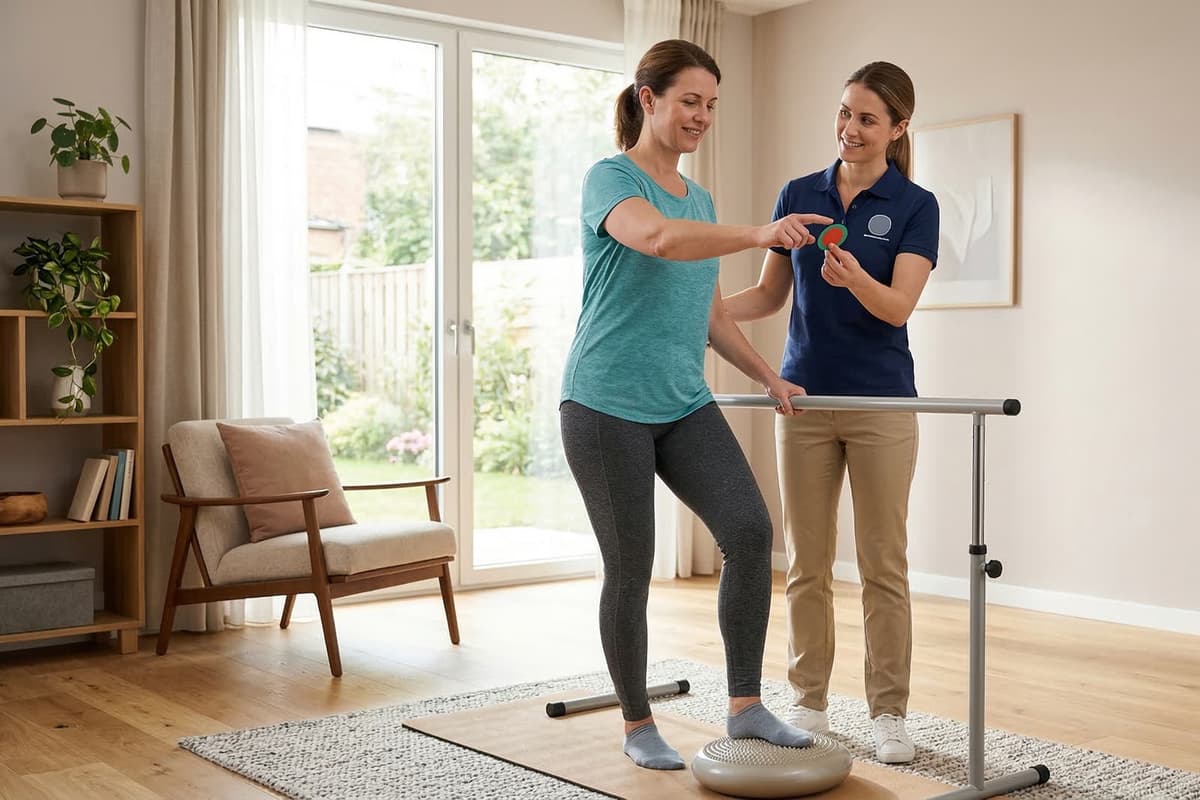
Balance training addresses the unsteadiness and fall risk that come with MS, using your actual home as the training ground. Cognitive strategies help with the thinking changes that many people with MS experience but rarely talk about openly, like word-finding trouble or difficulty multitasking. And ADL work keeps daily tasks manageable even as symptoms shift week to week.
Why home fits MS particularly well
Heat and fatigue both affect MS symptoms. A car trip to a clinic in Phoenix can cost you the very energy you needed for the session itself. In-home therapy removes that cost, and it means we see how MS actually shows up in your daily environment, not a clinic's controlled one.
Working alongside your neurologist
We coordinate with your medical team so therapy supports your treatment plan rather than working separately from it. What we see week to week is often useful information for them too.
Related conditions
If you are comparing similar symptoms or nearby diagnoses, these pages can help you understand related treatment options.
Neurologic Therapy
Stroke, Parkinson's, MS, and other nerve conditions all need task-specific practice. We retrain the movement in the house you'll use it.
Parkinson's Disease
Big, effortful movement helps Parkinson's more than cautious exercise. Home visits land during your 'on' hours, and we train the doorway that freezes you.
Stroke Recovery
Gains after a stroke keep coming past six months. We practice dressing, walking, and speech in your kitchen, and we bill Medicare Part B directly.
Related articles
Practical information from our team to help you better understand this condition and treatment options.
Does Medicare Cover In-Home Occupational Therapy in Arizona?
August 18, 2026
Yes, and you probably don't need to be homebound to get it. Here's how Medicare Part B, home health, and Medicare Advantage differ for Arizona families.
Reclaiming Life After Stroke: The Role of Occupational Therapy in Stroke Rehabilitation
June 27, 2025
Occupational therapy is vital for stroke survivors, aiding in regaining independence and confidence through personalized interventions in daily living, motor skills, cognitive rehabilitation, and community reintegration.