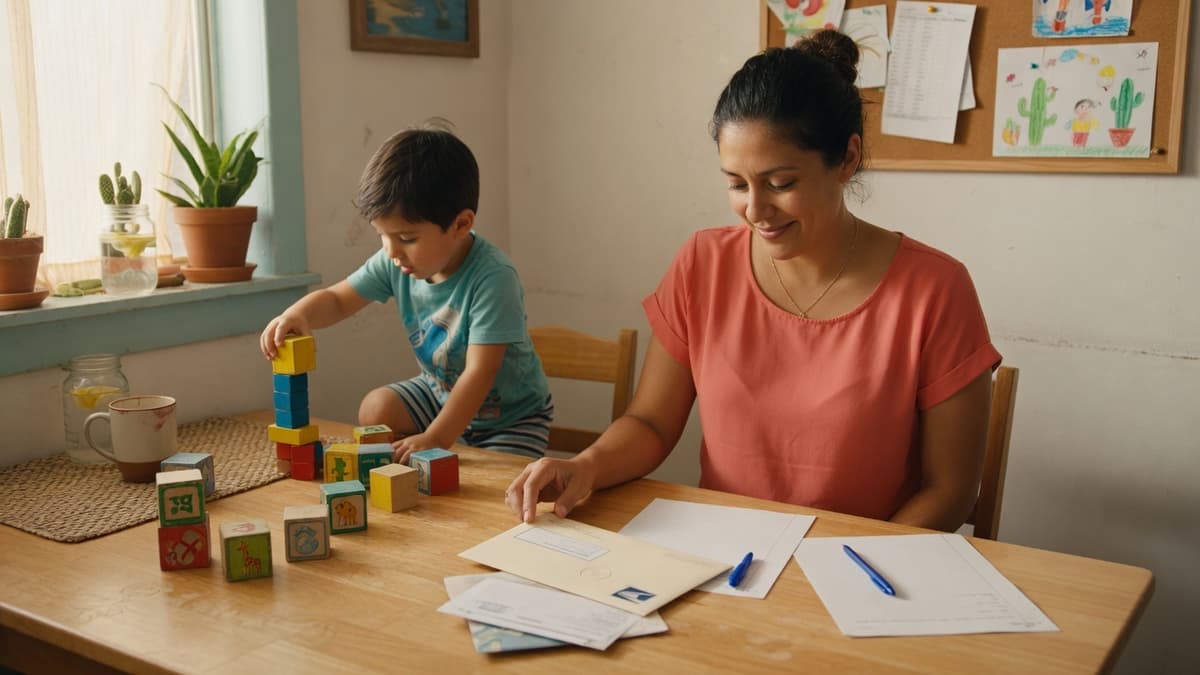
We Qualified for DDD. What Happens Next?
The letter came. Your child is eligible for DDD.
That answers one question. It opens ten more.
Here is what tends to happen next, and what you can ask along the way.
What the letter means
The letter says your child is eligible. That is real, and it matters.
But it does not set up services on its own. No visits are booked yet. No hours are set yet.
Think of it as a door that just opened. Someone still has to walk you through it.
Your Support Coordinator is your first call
DDD will assign you a Support Coordinator. This person is your main contact.
They help you plan services. They answer questions about your child's plan.
Good things to ask on that first call:
- What happens next, and when?
- What should I bring to our first meeting?
- Which services can we talk about?
- How do I reach you if I have a question?
Write down the answers. Write down their name and number too.
What is the planning meeting?
You and your Support Coordinator will meet. Together you build a plan for your child.
The plan is about your child's needs and your family's goals. You are part of the team. So is anyone else you invite.
How do I get ready for it?
Three things help a lot.
- Picture a normal day. Walk through morning to bedtime. Where does your child struggle? Getting dressed? Eating? Play? Sleep?
- Name the hard parts out loud. "He cannot hold a spoon" is easier to plan around than "he has trouble eating."
- Bring your papers. Reports, doctor's notes, school papers. Anything that shows what you see at home.
You do not need perfect notes. A short list on your phone is enough.
Is habilitation the same as therapy?
No. This trips up a lot of families.
Habilitation helps your child practice skills during daily life. It happens inside your normal routine.
Therapy means occupational, physical, or speech therapy. A licensed therapist checks your child, sets goals, and tracks progress.
The two can work well side by side. But they are not the same, and one does not swap in for the other. Your Support Coordinator can confirm what applies to your child's plan.
How do I choose a provider?
You choose. Families often miss that part.
DDD works with providers called qualified vendors. You pick from them. If it is not a good fit, you can ask to change.
Worth asking any provider:
- Do you come to our home?
- Do you have someone who speaks our language?
- How soon could we start?
- How will you keep us posted?
AVOLA Therapy is a qualified vendor with the Arizona Division of Developmental Disabilities (DDD).
What does therapy at home look like?
We come to you. We also offer telehealth when that works better.
So we work where your child's day happens. The bathroom, for washing up. The kitchen table, for meals and school work. The backyard, for play and balance.
You stay in the room. You learn the same steps we use. That way the work keeps going after we leave.
How long does all this take?
Longer than most families hope. Think weeks, not days.
There are steps in between. The meeting. The plan. Picking a provider. Setting a start date. Each one takes some time.
Ask your Support Coordinator what to expect. If things go quiet, it is fine to check in.
Ask every question you have
You are allowed to say "I did not follow that." You can ask again. You can ask for it in writing. You can ask for it in Spanish.
None of that is rude. Good coordinators expect it.
You can also talk to a therapist while you wait. In Arizona you do not need a doctor's referral for a screening. That is called Direct Access.
You just got handed a lot. One step at a time is fine.
AVOLA Therapy does not discriminate. Read our Notice of Nondiscrimination to learn how to ask for help in another format or another language.
Related Conditions We Treat
Learn more about the conditions discussed in this article and how in-home therapy can help.
ADHD
Kids with ADHD often know the steps. Starting them, sequencing them, and getting out the door is the hard part. We build that at home.
Autism Spectrum Disorder (ASD)
OT for autistic children builds the skills that make a day work: dressing, meals, sleep, transitions. We do that work in your home, not a waiting room.
Cerebral Palsy
No two children with CP move the same way. We build the plan around what your child can do today, in the house they actually live in.