How this can affect daily life
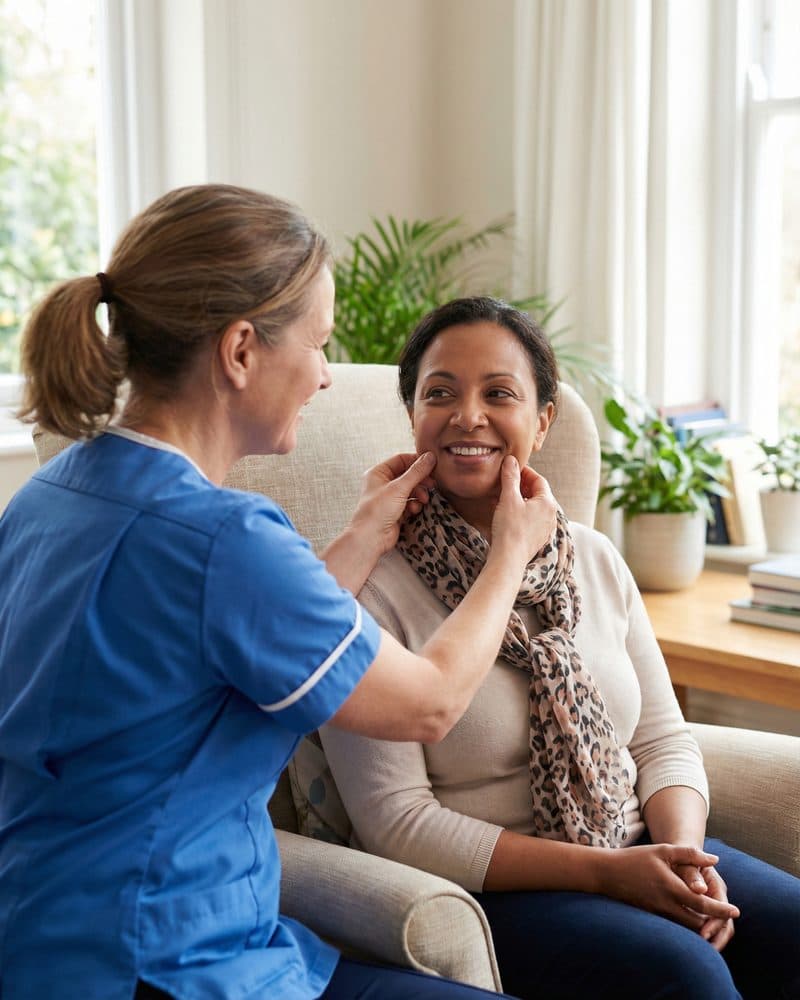
Bell's Palsy can affect comfort, mobility, balance, energy, and confidence with daily tasks. When one side of the face stops moving overnight, we protect the eye first, then retrain the nerve-to-muscle connection as it heals. When symptoms begin to change how someone moves, cares for themselves, or manages routines, therapy can help identify practical next steps.
When it may be time to schedule an evaluation
If pain, weakness, dizziness, or stiffness is affecting safety, mobility, or independence.
If walking, stairs, transfers, bathing, cooking, or other daily activities are becoming harder to manage.
If you want a clear plan to rebuild function, prevent setbacks, and feel safer at home.
What a care plan may include
Facial exercises
neuromuscular re-education
speech therapy
Therapies that may be part of the plan
The sudden half of a face that won't move
Bell's palsy shows up fast, often overnight. One side of the face stops responding. Smiling, closing the eye, raising an eyebrow, all of it uneven or gone on one side. Most people recover well, often within a few months, and most of that recovery happens on its own. What therapy adds is cleaner movement as the nerve comes back, and protection against the complications that can happen while it heals.
Why eye protection comes first
If the eye on the affected side won't close fully, it's at risk every single day until that changes. Dryness, irritation, even damage to the cornea. We address this early. How to protect the eye while you sleep. What to do during the day. How to track whether it's improving alongside the rest of the face.
What the exercises do
Facial exercises aren't about forcing movement back. They're about retraining the connection between the nerve and the muscle as it heals. The goal is coordinated movement, not jerky or overcompensating. That's neuromuscular re-education: small, specific, repeated movements done correctly, not big efforts done wrong.
When speech gets involved
For some people, the muscles affecting speech and swallowing are involved too. Speech therapy addresses articulation clarity and safe swallowing while the face recovers. It also helps you communicate with confidence in the meantime, which matters as much as the physical recovery.
What we track
We measure symmetry, strength, and coordination over time. Not just "is it better." That tracking tells us whether the plan is working and whether anything needs to change before recovery plateaus.
Related conditions
If you are comparing similar symptoms or nearby diagnoses, these pages can help you understand related treatment options.
Multiple Sclerosis (MS)
MS changes week to week. In-home therapy flexes with fatigue and heat, so a Phoenix car trip doesn't spend the energy the session needs.
Neurologic Therapy
Stroke, Parkinson's, MS, and other nerve conditions all need task-specific practice. We retrain the movement in the house you'll use it.
Parkinson's Disease
Big, effortful movement helps Parkinson's more than cautious exercise. Home visits land during your 'on' hours, and we train the doorway that freezes you.
Related articles
Practical information from our team to help you better understand this condition and treatment options.
Does Medicare Cover In-Home Occupational Therapy in Arizona?
August 18, 2026
Yes, and you probably don't need to be homebound to get it. Here's how Medicare Part B, home health, and Medicare Advantage differ for Arizona families.
Complex Regional Pain Syndrome (CRPS): When Your Nervous System Gets Its Wires Crossed
August 8, 2025
Complex Regional Pain Syndrome is a challenging pain condition often triggered by minor injuries, leading to disproportionate pain due to a malfunctioning nervous system. Learn about evidence-based management strategies including graded motor imagery and desensitization therapy.