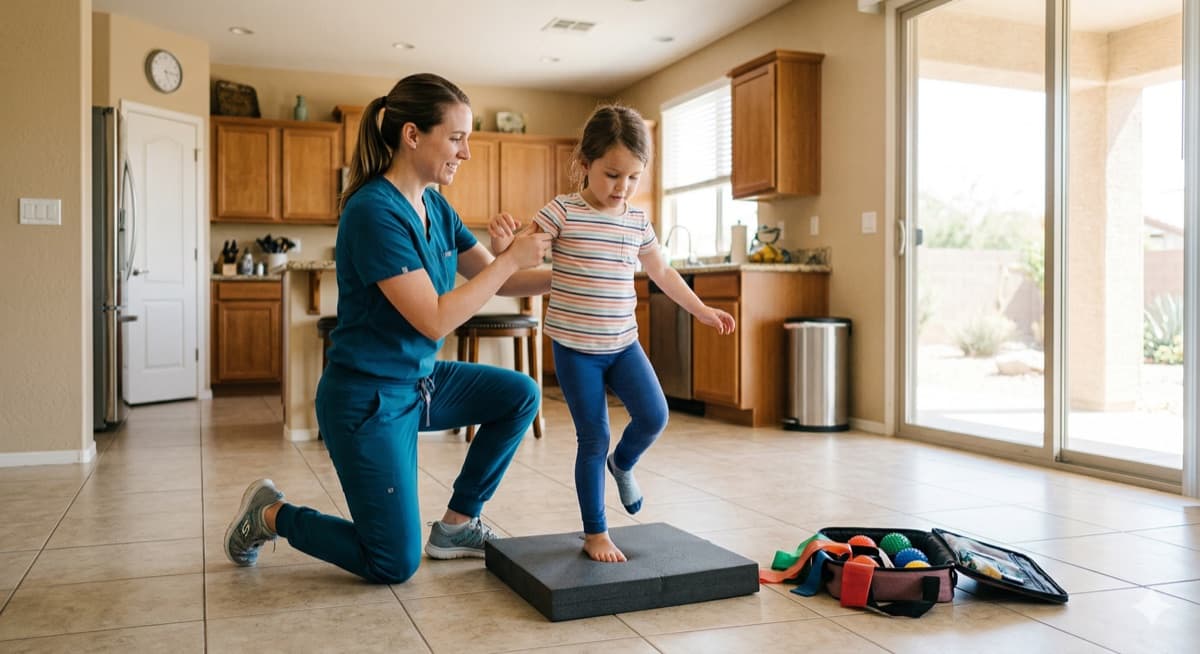
How this can show up at home, at school, and in play
Low Muscle Tone & Coordination Difficulties can affect play, attention, self-regulation, self-care, and school participation. The kid who looks clumsy is usually working harder than everyone else just to stay upright. We build the strength and coordination underneath. When these challenges start creating frustration, fatigue, or added stress for the family, an evaluation can help clarify which skills need support most.
When it may be time to schedule an evaluation
If your child needs more help than expected with play, dressing, eating, writing, routines, or classroom participation.
If teachers or caregivers notice frequent frustration, avoidance, quick fatigue, or trouble keeping up with important skills.
If you want a clearer picture of what support could help now and how to build a plan for home and school.
What a care plan may include
Strengthening exercises
balance and coordination training
gross motor skill building
core stability work
and functional movement practice for daily activities
Therapies that may be part of the plan
The kid who seems clumsy is usually working harder than everyone else
A child with low muscle tone or coordination difficulties often looks like they're not trying. Slouching. Tiring quickly. Tripping more than peers. In reality, that child is spending far more effort than everyone else just to stay upright and keep up. By the end of the day there's often nothing left for anything else.
Strength that supports everything else
Strengthening exercises build the foundation every other physical skill depends on. Low tone means muscles need more deliberate work to reach a strength level that comes automatically for other kids. This isn't about making a child "stronger" in the abstract. It's about giving them the physical base for everyday participation.
Core strength most people never think about
Core stability work often gets overlooked. A stable core is what lets arms and legs move with control and precision. A lot of the "clumsiness" people notice actually traces back to the core. It isn't giving arms and legs a stable enough base to work from.
Balance and coordination, built specifically
Balance and coordination training addresses the specific gaps affecting your child, not a generic gross motor curriculum. Every child's coordination profile is a little different, and the plan should reflect that.
Real tasks, not just exercises
Functional movement practice ties everything together in the tasks that actually matter. Climbing stairs safely. Catching a ball with friends. Keeping up on the playground without falling behind. That's the actual goal, not a stronger score on an isolated test.
Related conditions
If you are comparing similar symptoms or nearby diagnoses, these pages can help you understand related treatment options.
Autism Spectrum Disorder (ASD)
OT for autistic children builds the skills that make a day work: dressing, meals, sleep, transitions. We do that work in your home, not a waiting room.
Cerebral Palsy
No two children with CP move the same way. We build the plan around what your child can do today, in the house they actually live in.
Developmental Delays
A delay is not a life sentence. Early, play-based therapy in your home gives a child the best shot at catching up during the years that count.
Related articles
Practical information from our team to help you better understand this condition and treatment options.
We Qualified for DDD. What Happens Next?
August 11, 2026
Got your DDD eligibility letter? Here's exactly what Arizona families can expect in the first months, and the questions worth asking along the way.
Developmental Milestones: What to Watch For and When to Act
April 1, 2026
Understanding developmental milestones helps parents spot early signs that a child may benefit from occupational therapy. Learn what to watch for at each age and when to seek a professional screening.