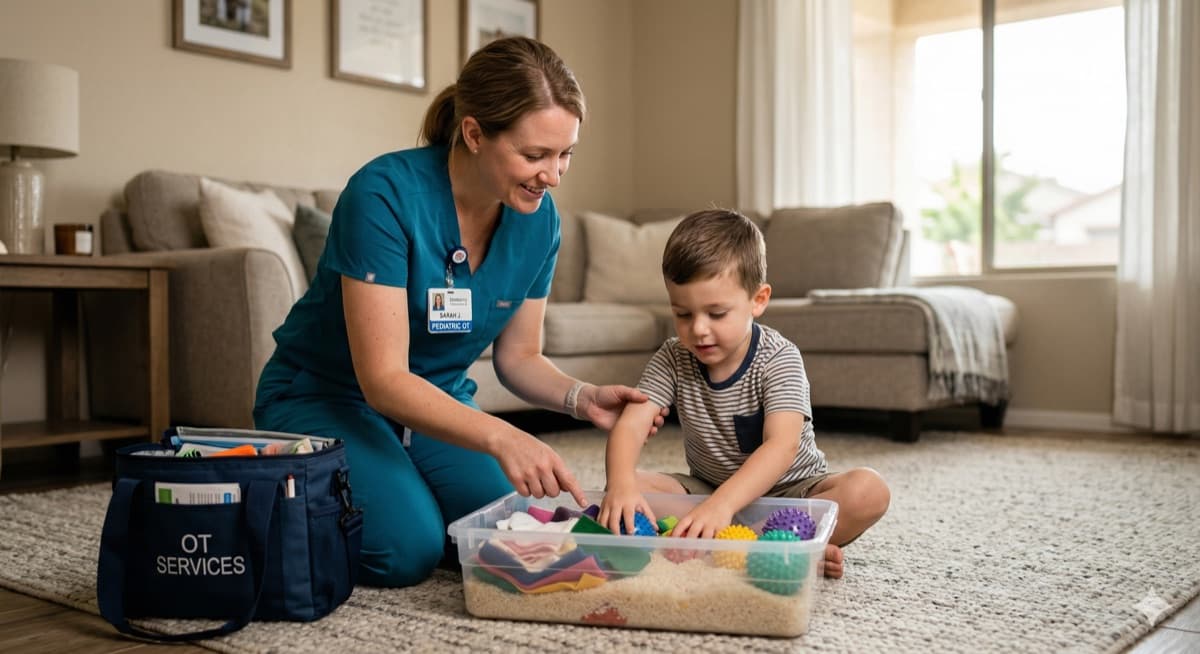
How this can show up at home, at school, and in play
Sensory Processing Disorder can affect play, attention, self-regulation, self-care, and school participation. Meltdowns at haircuts, tags, noise, or meals are often sensory, not behavior. We build the plan in your actual bedroom, table, and bath. When these challenges start creating frustration, fatigue, or added stress for the family, an evaluation can help clarify which skills need support most.
When it may be time to schedule an evaluation
If your child needs more help than expected with play, dressing, eating, writing, routines, or classroom participation.
If teachers or caregivers notice frequent frustration, avoidance, quick fatigue, or trouble keeping up with important skills.
If you want a clearer picture of what support could help now and how to build a plan for home and school.
What a care plan may include
Sensory integration therapy
sensory diet development
environmental modifications
self-regulation strategies
and home routine carryover
Therapies that may be part of the plan
What families notice first
Sensory processing difficulties rarely arrive with a label. They arrive as a child who melts down at haircuts. Can't tolerate clothing tags or seams. Gags at whole categories of food. Covers their ears in noisy rooms. Crashes into furniture and people all day. Can't sit still long enough for a meal or a lesson.
These aren't behavior problems, and a child doesn't grow out of them by being asked to try harder. They're differences in how the nervous system takes in and organizes information. They respond well to structured, skilled support.
Seeking and avoiding are both signals
Some kids seek input relentlessly. Spinning, jumping, crashing, chewing, touching everything. Others avoid it. Resisting textures, sounds, movement, messy play. Many do both, in different channels, which is why the picture can look contradictory to parents.
The work is finding each child's specific pattern, then building a daily rhythm that gives the nervous system what it needs before it gets dysregulated, instead of reacting after a meltdown starts.
Why we treat this at home
A sensory plan built in a therapy room is a guess about a house. Working at home lets us adjust the actual bedroom, the actual dining table, the actual bath and bedtime routine, the actual clothes in the drawer. We see the noise level of the real kitchen and the lighting in the real corner where homework happens.
Families leave with a practical sensory diet, calming and alerting strategies that fit their child, feeding and clothing adaptations, and fewer daily flashpoints.
Working with schools
Where a child struggles in the classroom too, we help translate the home strategies into things a teacher can realistically do, and we coordinate with school staff so the child isn't asked to follow two different systems.
How a sensory diet gets built
A sensory diet isn't handed over on a single sheet of paper. It gets built visit by visit, out of whatever happened in your house that week. One visit might go to the fifteen minutes before school, when getting dressed turns into a fight over sock seams. The next might go to the stretch after dinner, when a kid who held it together all day finally comes apart.
The therapist watches the routine, changes one or two things, and leaves you with something small enough that it gets done. Heavy work before anyone touches the seams. A chewy in the backpack. A five-minute crash-and-squeeze break folded into the after-school transition rather than stacked on top of it.
If a strategy needs twenty minutes you don't have, it won't survive the week, so we don't leave you with it.
Related conditions
If you are comparing similar symptoms or nearby diagnoses, these pages can help you understand related treatment options.
Autism Spectrum Disorder (ASD)
OT for autistic children builds the skills that make a day work: dressing, meals, sleep, transitions. We do that work in your home, not a waiting room.
Cerebral Palsy
No two children with CP move the same way. We build the plan around what your child can do today, in the house they actually live in.
Developmental Delays
A delay is not a life sentence. Early, play-based therapy in your home gives a child the best shot at catching up during the years that count.
Related articles
Practical information from our team to help you better understand this condition and treatment options.
We Qualified for DDD. What Happens Next?
August 11, 2026
Got your DDD eligibility letter? Here's exactly what Arizona families can expect in the first months, and the questions worth asking along the way.
Developmental Milestones: What to Watch For and When to Act
April 1, 2026
Understanding developmental milestones helps parents spot early signs that a child may benefit from occupational therapy. Learn what to watch for at each age and when to seek a professional screening.